

Create a test
On the Tests tab, select + Test to open the Add tests panel.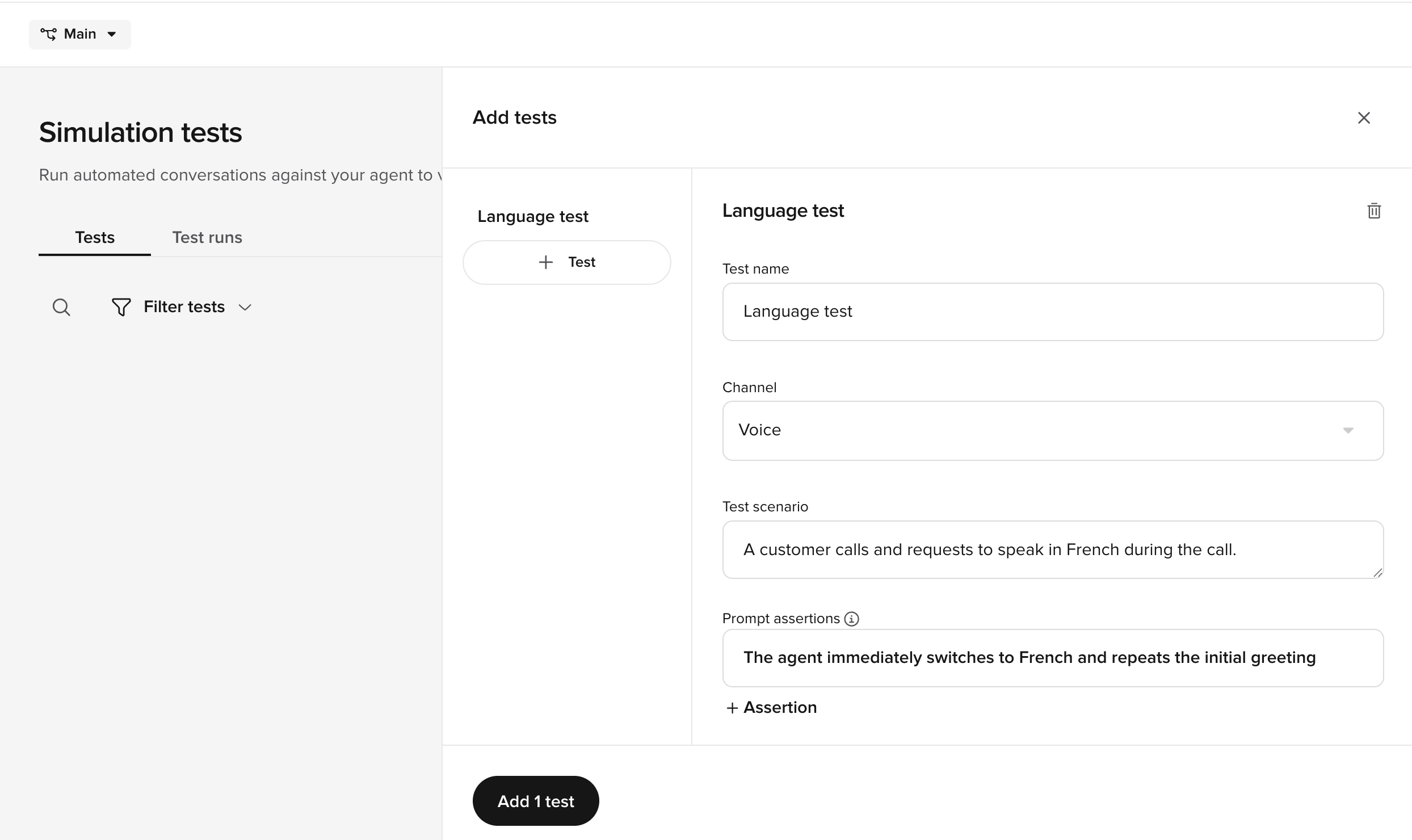
1
Name the test
Give the test a descriptive name that summarizes the scenario (for example, “Language test” or “After-hours booking”).
2
Choose a channel
Select Voice or Chat from the Channel dropdown. The channel determines how the conversation is simulated.
3
Write a test scenario
Describe the caller’s behavior in plain language. The simulator uses this to generate realistic caller turns.Example: A customer calls and requests to speak in French during the call.
4
Add prompt assertions
Assertions describe what the agent should do during the conversation. After the test runs, each assertion is evaluated and marked as passed or failed.Select + Assertion to add more.Example: The agent immediately switches to French and repeats the initial greeting.
5
[Optional] Add tags
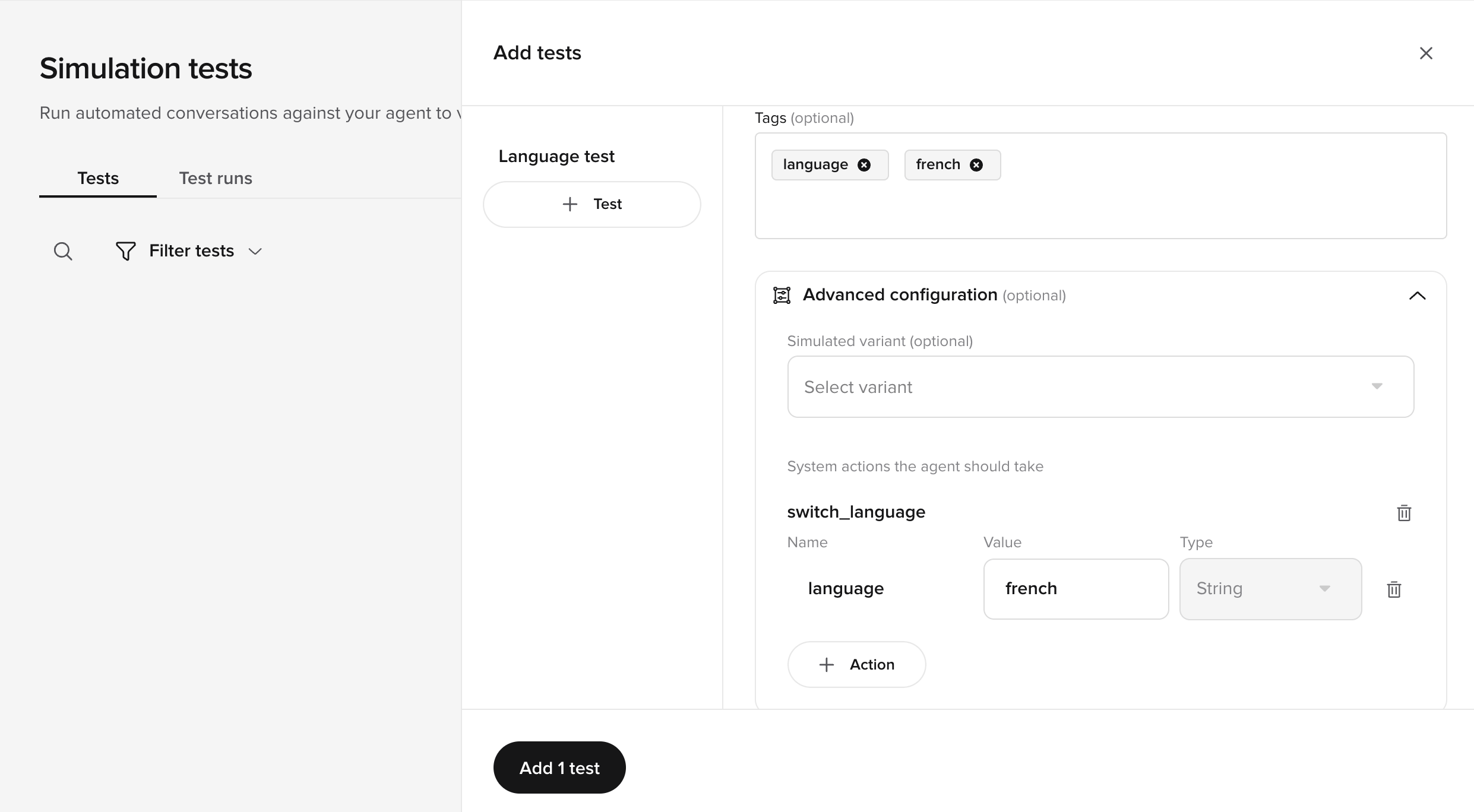
Add tags to organize and filter tests. Type a tag name and press Enter. A test can have multiple tags (for example,
language and french).Use tags with the Filter tests control on the Tests tab to find related tests quickly.6
[Optional] Configure advanced settings
Expand Advanced configuration to access optional settings:
- Simulated variant — select a specific variant to run the test against. Leave blank to use the default.
-
System actions — define actions the agent is expected to take during the conversation. See System actions below.
7
Save the test
Select Add 1 test to save. The test appears in the Tests tab ready to run.
System actions
System actions verify that the agent triggers the right backend operations — not just that it says the right things. Each action has:
Select + Action to add more system actions to the test.
Best practices
- Name tests descriptively – use names that describe the scenario, not the expected outcome (for example, “Caller cancels booking” rather than “Test 1”).
- Cover happy paths and edge cases – include both successful flows and failure scenarios (invalid input, missing data, handoff triggers).
- Use system actions for backend verification – don’t just test what the agent says; verify it triggers the right actions with the right parameters.
- Use real conversations as a starting point – save cases from Conversation Review to test against real-world scenarios.