

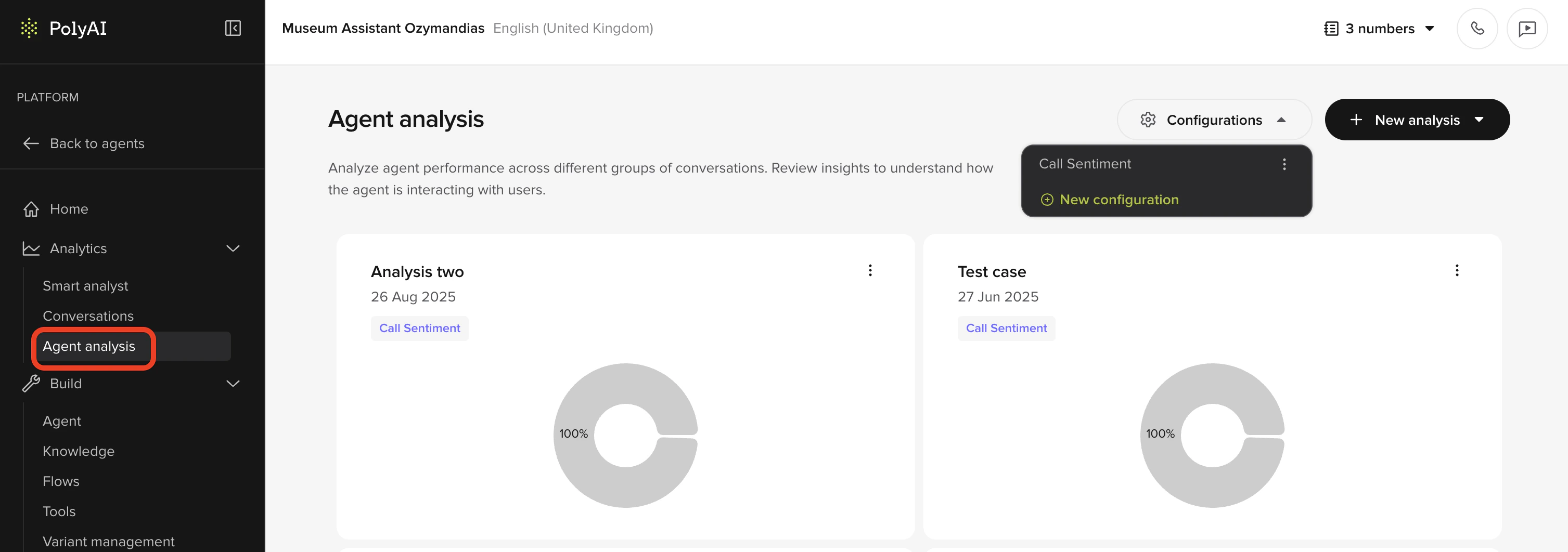
Overview
Each project can have up to 10 analysis tasks, each with its own prompt, categories, and color-coding. Once configured, batches of up to 250 calls can be grouped and processed per task, returning one category per call. Results are displayed in a visual breakdown and can be reviewed or adjusted manually.How it works
Create or edit your analysis configuration
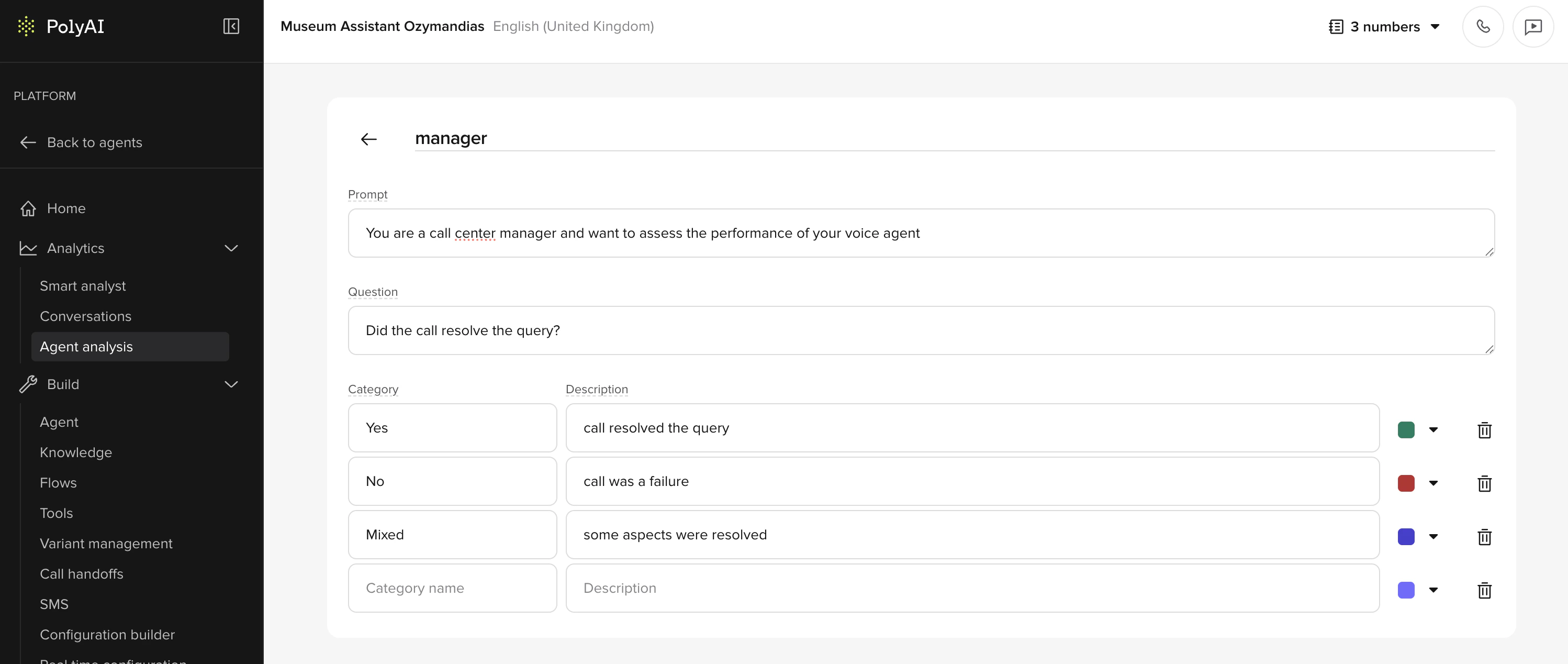
- A Prompt describing the task, e.g. “You are a call center manager assessing agent performance.”
- A Question to guide the LLM’s judgment, e.g. “Was this call handled successfully?”
- A set of Categories – each with a name, description, and color
Group calls for analysis
Click Create group. This opens the Conversations view, where calls can be filtered and selected.
View results
Once the group is created, it appears on the Agent Analysis page. Each group shows a visual breakdown of categories and a list of processed calls.Click Open to review individual calls and access transcripts and metadata.
Analysis over time
Agent Analysis can run automatically as a one time analysis, or on a daily or weekly schedule. How scheduled batches work:- Set up an automated schedule from the Agent Analysis dashboard
- Choose daily or weekly runs to continuously analyze the latest call data
- Each batch appears as a new entry, with trend visualization across multiple runs
- Review progress using bar charts and filters that compare results from recent batches
Related pages
Smart Analyst
Explore patterns across conversations using natural-language questions and deep sampling.
Conversation review
Review detailed transcripts and metadata for individual conversations.
Safety Dashboard
Monitor safety metrics and risky interactions across your agent.
Transcripts
Export and archive call transcripts for compliance and training.